
AI in Workforce Analytics & Planning
Intro: AI in Workforce Analytics & Planning:
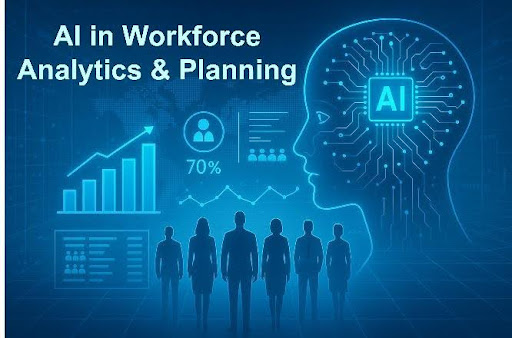 If Payroll is where AI proves it can count, Workforce Analytics & Planning is where it proves it can think.
This category sits at the core of Study #3: AI in Employee Experience & People Insights. It’s where headcount, skills, productivity, wellbeing, and cost finally stop living in separate slide decks and start behaving like one system of work.
In other words: this is where HR, Finance, and Operations either learn to play together—or keep losing to reality.
Why Workforce Analytics & Planning Suddenly Matters More Than Ever
Workforce planning used to be a once-a-year ritual:
- Finance sends a headcount target.
- HR fills in spreadsheets.
- Business leaders nod politely, then ignore the plan by March.
Meanwhile, real life throws: hiring freezes, restructuring, new markets, automation, burnout, attrition, skills shortages, and “we need an AI team yesterday”.
AI in Workforce Analytics & Planning exists to close the gap between plan and reality. Not with prettier dashboards, but with:
- Faster, cleaner data from HRIS, ATS, T&A, payroll, engagement tools, and project systems.
- Forward-looking scenarios instead of rear-view reports.
- Skills-based views of capacity, not just headcount and job titles.
- Explainable recommendations instead of opaque black-box scores.
Done right, this is not “reporting plus AI.” It’s a continuous decision system for the workforce.
What AI Actually Does in Workforce Analytics & Planning
Forget the buzzwords for a second. At a provider level, AI in this category typically focuses on five capabilities:
- Data stitching & cleaning
- Matching people records across multiple systems.
- Detecting duplicates, outliers, and impossible values.
- Normalizing job titles, skills, and org structures.
- Descriptive & diagnostic insights
- Explaining where attrition, overtime, or absenteeism spike—and for whom.
- Linking workforce patterns to business outcomes like revenue, NPS, or error rates.
- Forecasting & scenario modelling
- Projecting headcount, skills gaps, and cost under different assumptions.
- Testing “what if” scenarios: hiring ramp, automation, restructuring, demand swings.
- Optimization & constraint-based planning
- Recommending staffing mixes under budget, service level, and legal constraints.
- Balancing FTE, contingent, gig/EOR, and automation—not just “more full-time staff”.
- Narratives & copilots
- Turning messy numbers into board-ready storylines.
- Letting HR or business leaders ask natural questions and get explainable answers, not SQL errors.
The best providers don’t sell AI features; they sell better decisions per hour of human attention.
From Dashboards to Decisions: Three Big Shifts
- From “Show me the numbers” to “Show me the trade-offs”
Old world:
“Here’s the attrition dashboard. Here’s the cost dashboard. Here’s the engagement dashboard.”
New world:
“If we reduce weekend overtime by 20%, we’ll need 37 additional FTE or we’ll miss service levels in Q4.”
AI doesn’t just describe reality; it quantifies trade-offs between cost, capacity, risk, and employee experience.
- From static headcount plans to dynamic, skills-based capacity
Job titles don’t tell you whether you can actually deliver the work.
AI-enabled planning shifts from “we have 500 engineers” to “we have X hours of skills A, B, and C across locations and contracts”, and whether that’s enough given pipeline, projects, and seasonal demand.
This is where Talent Intelligence, L&D, and Workforce Planning converge: skills inferred from CVs, projects, courses, and performance become a living input into the plan—not just a side-project for HR.
- From annual planning to rolling simulations
Annual plans are dead by February.
AI in Workforce Analytics & Planning enables rolling, scenario-based planning:
- Demand changes → recompute capacity and cost.
- Policy changes → recompute risk and service levels.
- New technology or automation → recompute workforce mix and skills needs.
You don’t rebuild the model every time; the model runs continuously, with humans checking assumptions and signing off on decisions.
Why This Belongs in “Employee Experience & People Insights”
Workforce Analytics & Planning might sound like an HR-Finance back-office game, but it has direct EX impact:
- Burnout & wellbeing: Use workload, schedule, and case volume data to predict where burnout risk will spike and adjust staffing or work design before people crash.
- Fairness: Spot systematically overloaded teams, unfair shift patterns, or inequitable promotion paths.
- Voice to action: Link engagement, pulse, and listening data directly to resourcing and workflow changes, not just slide-deck commentary.
- Career confidence: When employees see that planning is skills-based and transparent, they trust that mobility, upskilling, and staffing decisions are not pure politics.
EX is not just about apps and surveys. It’s about whether the way work is planned makes life more sustainable, fair, and meaningful—or not.
The 5 Levels of AI Maturity in Workforce Analytics & Planning
Short and sharp—no 30-page framework, just a quick mirror.
Level 1 – Reactive Reporting (Ad-hoc, manual)
- Data lives in spreadsheets and local systems.
- HR spends weeks hand-building reports; Finance has its own versions.
- “Planning” = last year’s numbers plus a percentage.
- AI usage: none or experimental pilots in isolated teams.
Level 2 – Descriptive Analytics (Single source of truth)
- Basic HR data warehouse or analytics platform in place.
- Standard dashboards for headcount, attrition, diversity, and costs.
- Limited, manual scenario analysis; Excel still rules.
- AI usage: maybe some automated cleaning, simple trend detection.
Level 3 – Scenario-Based Planning (Connected but siloed)
- HR, Finance, and Operations can jointly run “what if” scenarios.
- Forecasts for demand, hiring, and attrition are data-driven, not gut feel.
- Planning includes multiple worker types (FTE, contractors, gig) but skills and EX are still secondary.
- AI usage: forecasting models, anomaly detection, basic simulators.
Level 4 – Skills-Aware, Continuous Planning
- Skills graph or similar capability feeds into capacity planning.
- Rolling plans, updated monthly or quarterly based on real data.
- EX signals (burnout risk, engagement, schedule quality) influence staffing and workload decisions.
- AI usage: multi-source modelling, advanced forecasting, explainable recommendations to leaders.
Level 5 – Autonomous, Guardrailed Workforce Operating System
- Planning runs continuously in the background, suggesting staffing, hiring, redeployment, and automation options.
- Constraints: budget, regulation, contracts, diversity targets, EX thresholds.
- Humans focus on choosing between options, setting policy, and validating assumptions—not crunching numbers.
- AI usage: integrated optimization, powerful copilots, auditable decision trails and scenario history.
You don’t need to be at Level 5 tomorrow. But you do need to know where you are—and whether your next move is actually realistic.
Key Benefits for HR, Finance, and the Business
When AI-enabled Workforce Analytics & Planning is done with discipline, you earn:
- Better capital allocation: Put people and money where they actually move productivity, not where politics is loudest.
- Fewer fire drills: Hiring freezes, restructures, and ramp-ups stop being panicked reactions and start looking like rehearsed scenarios.
- Higher EX with lower risk: You identify overload, toxic workloads, and unsustainable patterns early—and act with evidence, not anecdotes.
- Stronger position in the C-suite: HR and People Analytics don’t just present history; they shape strategy with hard numbers and clear trade-offs.
The Dark Side: Risks, Illusions, and Governance Gaps
Of course, there’s a flip side. AI in this space can also create beautiful illusions:
- False precision: A three-decimal-place forecast does not mean the assumptions are right. If leaders stop challenging assumptions, you’re drifting—just more elegantly.
- Opaque models & bias: If your planning models encode past bias (who was promoted, who was “high potential”), they can automate discrimination at scale.
- Surveillance creep: Combining EX, productivity, and scheduling data can easily cross the line into intrusive employee monitoring that destroys trust.
- Decision laundering: “The system recommended this workforce cut; we just followed the model.”
No. AI can inform; it must never be allowed to own the ethical responsibility.
That’s why governance is not optional:
- Clear model ownership and accountability.
- Documented assumptions and data sources.
- Regular fairness and bias checks.
- Involvement of works councils and employee reps where required.
- Strict boundaries on what is out of scope (e.g., no psychometric guessing games, no hidden productivity scoring).
How to Move Up a Level (Without Buying Everything at Once)
You don’t need a moonshot to get started—or to progress.
If you’re around Level 1–2
- Stop reporting everything. Decide on 10–15 critical questions you need to answer repeatedly (e.g., “Where will we be short of X skills in 12–18 months?”).
- Invest in data foundations: clean IDs, consistent org structures, and basic integration between HRIS, payroll, and T&A.
- Run one joint planning ritual with HR, Finance, and Operations using the same dataset.
If you’re around Level 3
- Add skills data—even if imperfect. Start with roles where shortages hurt most.
- Introduce basic EX signals into planning: attrition risk, burnout proxies, critical engagement questions.
- Pilot AI-assisted scenario planning in one business unit and document the impact on decisions and outcomes.
If you’re heading to Level 4–5
- Formalize model risk management: documentation, testing, sign-offs.
- Implement human-in-the-loop checkpoints for all major recommendations (hiring freezes, workforce reductions, automation decisions).
- Make narrative transparency a feature: every recommendation should come with “because…” explanations in plain language.
What We’re Studying in the AI in HR & WFM Study 2026
In Study #3: AI in Employee Experience & People Insights, the Workforce Analytics & Planning category looks at providers and users through a few lenses:
- How broadly and deeply their AI supports real planning decisions (not just dashboards).
- How they integrate skills, EX, and multi-contractor types into planning.
- How mature their customers are across the 5-level model.
- How providers handle explainability, governance, and employee trust.
- Where early adopters are already seeing measurable impact—and where the hype runs ahead of reality.
The goal is not to crown a single winner, but to map who actually helps organizations move up a level rather than just selling more charts.
Bottom Line
Move from dashboard theater to decision engines.: Clean your data, pick the few decisions that really matter, and demand AI that makes trade-offs explicit, respects employee experience, and leaves humans clearly in charge of the ethics.
And if you want to see where your organization—and your vendors—really stand on that 1-to-5 scale, you know where to find us in the AI in HR & Workforce Management Study 2026.
Take part in the study, share your use cases and pain points, and get early access to the IEC Dynamic Map Quadrants AI in Employee Experience & People Insights. If you’re building the next generation, don’t just ship features — show leadership. Join the study, share your strongest use cases and pain points from the front line.
———————————————————————-
Closing note & invitation
 Provider comparisons—and the identification of the leading AI provider in Talent Acquisition—will be a core part of the first global IEC study on “AI in Talent Management and Development.” Participants are invited to join free of charge.
Participation: pm@theIECgroup.com
Study scope (AI-first lens):
Study #1: AI in Talent Intelligence & Development
- AI-Driven Talent Acquisition
- Performance & Talent Intelligence
- Learning & Development (incl. internal mobility/marketplaces)
Study #2: AI in Workforce Operations & Pay
- AI in Scheduling & Time Management
- AI for Payroll & Compliance
- Total Workforce Orchestration (VMS/FMS, contractors, EOR)
Study #3: Employee Experience & People Insights
- Employee Experience & Virtual Assistants
- Workforce Analytics & Planning
Over the next few weeks, we’ll zoom into each of the eight categories in IEC Rebel’s Digest—one deep dive at a time, with practical use cases, KPIs, and the vendor patterns to watch.
IEC Rebel’s Digest— The IEC Group can help you audit your global employment setup by identifying labor leasing risks, verifying licensing requirements, and ensuring your EOR partners meet every compliance standard—before regulators come knocking.
Last but not Least: If you’re facing challenges and wondering how others are managing similar issues, why not join The Leadership Collective Community? It’s a peer group and webcast platform designed for leaders to exchange insights and experiences.
Introducing the IEC Knowledge Network Free Membership – Your Gateway to Seamless Access!
We are thrilled to present a new service that goes beyond the ordinary download experience. In addition to offering you the ability to download the things you love, we are delighted to introduce the IEC Knowledge Network Free Membership.
The Free Membership option grants you access to our library of articles and videos, without the need for tedious registrations for each piece of content.
The publication serves as a trusted resource to support executives in their pursuit of sustainable and successful global expansion. In addition the IEC Practitioners are available to discuss your specific challenge in more detail and to give you clear advise..
Take advantage of this valuable resource to accelerate your global expansion journey

